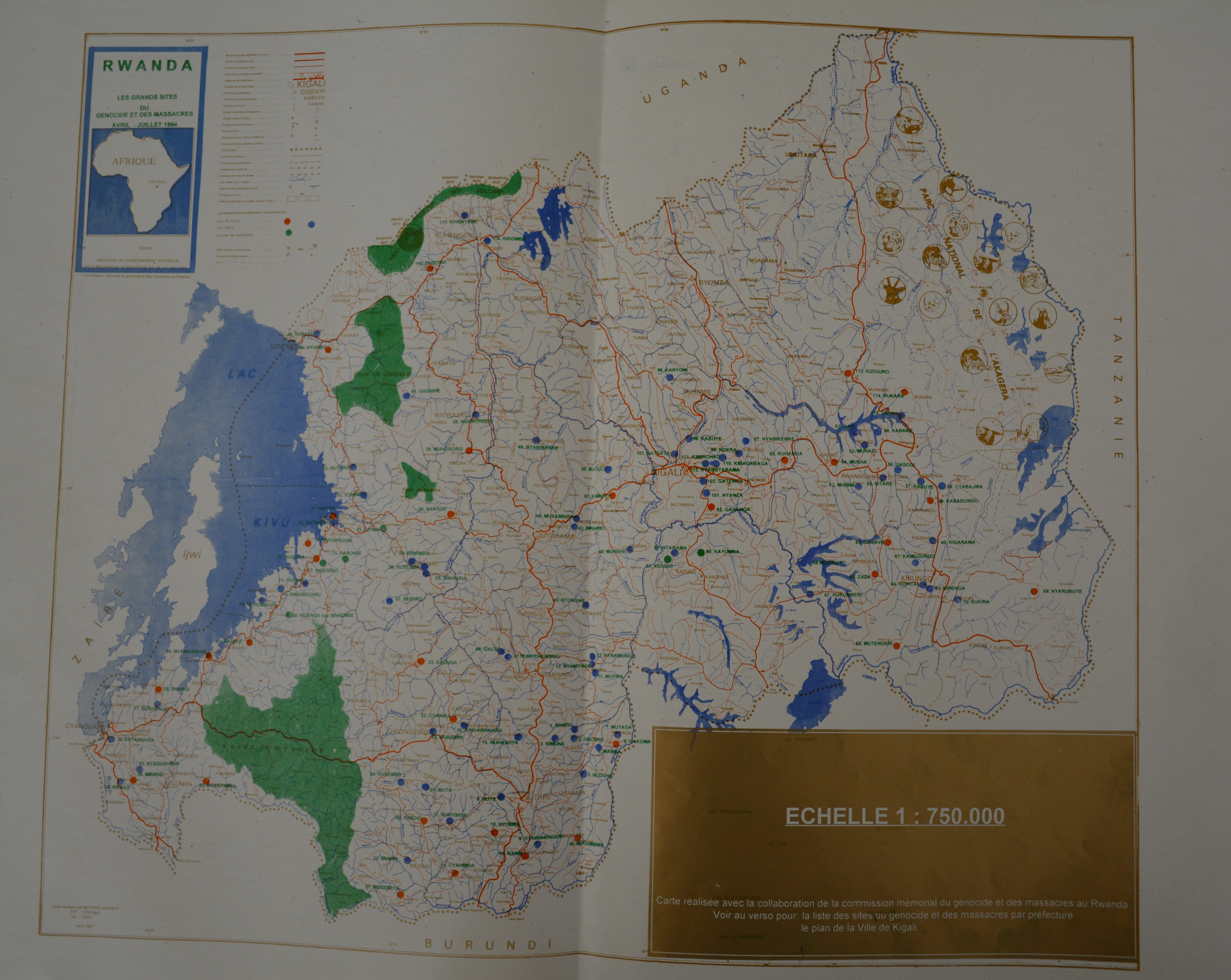
Citation
Three years ago, Bill Clinton travelled to Rwanda to apologise for ignoring
the murder of 800,000 Tutsis in the swiftest genocide of the 20th century.
Clinton's security men would not let him venture beyond Kigali airport, so
the American president stayed in Rwanda just long enough to tell the
survivors that he felt deep remorse but that his inaction stemmed from
ignorance.
"It may seem strange to you here, especially the many of you who lost
members of your family, but all over the world there were people like me
sitting in offices, day after day after day, who did not fully appreciate
the depth and the speed with which you were being engulfed by this
unimaginable terror," the US president said.
It was another of piece of Clinton prevarication. Newly released official
documents reveal the extent of the US administration's knowledge about the
genocide, and its complicity in failing to stop the killing.
From the first day of murder, which began within hours of the Rwandan
president's plane being shot down over Kigali airport, senior American
officials were warning of mass slaughter. Yet it was not until most of the
killing was over that the US secretary of state, Warren Christopher, even
allowed his staff to use the word "genocide" in talking about Rwanda.
In between, the US administration poured most of its efforts into finding
reasons not to "do something".
On April 6 1994, the day President Juvenal Habyarimana was assassinated -
probably by Hutu extremists opposed to powersharing with Tutsis - the
principal US deputy assistant secretary of state for African affairs,
Prudence Bushnell, wrote a memo to Christopher. It was prescient.
"There is a strong likelihood that widespread violence could break out ...
particularly if it is confirmed that the plane was shot down," she warned.
The first targets were moderate Hutus opposed to the killing of Tutsis.
Within days, the Tutsis themselves were being murdered in vast numbers. The
documents show that the Clinton administration went further than merely
turning a blind eye to the killing and refusing to stop the massacres.
One state department memo drawn up after a meeting of senior officials lays
out the case for intervention to stop the killings. Added to it are notes
from an unnamed higher authority intent on ensuring that the Americans do
nothing more than press for talks, for fear of being drawn into a military
operation.
In one telling comment, the hidden hand orders that "attempts" to get a
ceasefire be changed to "political efforts".
"Without 'political' there is a danger of signing up to troop
contributions," the note says. The memo goes on to warn officials not to use
the word "genocide" in reference to the killings because, under
international conventions, it would oblige the US to try and stop the mass
murder.
"Be careful. Legal at State was worried about this yesterday - Genocide
finding could commit USG [the US government] to actually 'do something'," it
says.
It was not only that the Americans did not want to get involved; they did
not want others to either, for fear that US troops would eventually be drawn
in. To that end, Washington wanted the UN peacekeeping force - known as
Unamir - withdrawn from Rwanda even though its commander, General Romeo
Dallaire, was arguing that with 5,000 soldiers he could put an end to the
killing.
The memo goes on to make clear that the American interest is ensuring the
"warring factions" do not endanger foreigners. It makes no mention of the
Rwandan civilians then being butchered.
Yet an internal memo to the then US secretary of state for Africa, George
Moose, makes clear that American officials knew exactly what was going on.
"There is substantial circumstantial evidence implicating senior Rwandan
government and military officials in the widespread, systematic killing of
ethnic Tutsis, and, to a lesser extent, ethnic Hutus who supported
power-sharing between the two groups," the document says.
"Massacres in Rwanda have claimed from 200,000 to 500,000 lives, according
to international humanitarian organisations... Most of those killed have
been Tutsi civilians, including women and children."
One state department telegram describes how three weeks after the killing
started, Bushnell phoned a top Rwandan military officer, Colonel Theoneste
Bagosora, to urge an end to the killings. Bushnell's choice revealed just
how well the Americans understood what was going on. Bagosora was Rwanda's
Himmler. He was at the centre of the organisation of the genocide, a leader
of the Hutu extremist factions and may well have had a hand in the
president's murder.
"Bushnell confronted him [Bagosora] with eyewitness accounts of Rwandan army
complicity in the killings, and said the world did not believe the interim
government/Rwandan military's party line," the telegram says.
Later, Bagosora tells Bushnell the killings are dying down in Kigali and
that most areas are calm, with the exception of Butare and Gitarama. "He
said the president had travelled to Butare the previous day in an attempt to
calm the population," the telegram says.
In fact, Rwanda's new president, Theodore Sindikubwabo, went to Butare to
admonish Hutus for not killing Tutsis fast enough. As he flew out, the pace
of the slaughter in the city rose sharply. Bagosora is awaiting trial for
genocide at the international tribunal for Rwanda.
The US also declined to threaten to punish the organisers of the murders
until a ceasefire was established, for fear of "scaring off" Rwanda's
leaders. But the Hutu organisers of the genocide were desperate for a
ceasefire, in part because they were losing the war against the Rwandan
Patriotic Front and also because it would allow them to divert soldiers from
fighting the war to killing Tutsi civilians. There is every reason to
believe that a ceasefire would have cost even more Tutsi lives.
As late as the third week of May - six weeks into the killing, by which time
hundreds of thousands of Tutsis were already dead - the US administration
was still debating whether to use the word "genocide" to describe the
slaughter. Warren Christopher eventually agreed that officials could refer
to "acts of genocide" but they could not say "genocide has occurred".
This semantic distinction was to save the American government from its legal
obligations, having already ignored its moral responsibilities. "A USG
statement that acts of genocide have occurred would not have any particular
legal consequences," the memo concludes.
Bill Clinton's apology for his inaction three years later was publicly
welcomed by Rwanda's new leaders because, by then, American guilt was
helping to channel hundreds of millions of dollars to rebuild the devastated
country. But, in private, those same Rwandan leaders scoffed at the US
president's explanation.
The rest of the world hardly took any more notice of Clinton's professed
remorse than it did of the genocide itself. After leaving Rwanda, the
American president held a press conference in neighbouring Uganda. The first
question was about Monica Lewinsky.