Citation
INNOCENT NDAMYINA GISANURA
We chose to fight back
Before the genocide
My name is Innocent and I was born in the Gitezi district of Kibuye, on the
outskirts of the town. My family consisted of Mum and Dad and eight
children, and I was the fourth born. The genocide began when I was 14 years
old and in high school at the Groupe Scolaire Nyamasheke in Cyangugu. My
entire family was killed, including Mum and Dad: I'm now the only one left.
The genocide didn't exactly start in 1994 ~ we could see signs of it
earlier at my primary and high schools. At the time, there were car bombings,
students were beaten up; there was a bad atmosphere and it seemed as if
something was being planned. But 1994 was the grand finale, when I
witnessed horrific, animalistic behaviour far worse than I could ever have
imagined.
The genocide
It began when the President's aeroplane crashed and, on the orders of
murderous soldiers and others who had planned the genocide, permission
was given to kill Tutsis. The next day, they started attacking homes and
killing people. In our area some people were killed. They came to remove
us from our homes, burning them and taking our animals.
When the attacks started, my family decided to leave home and we
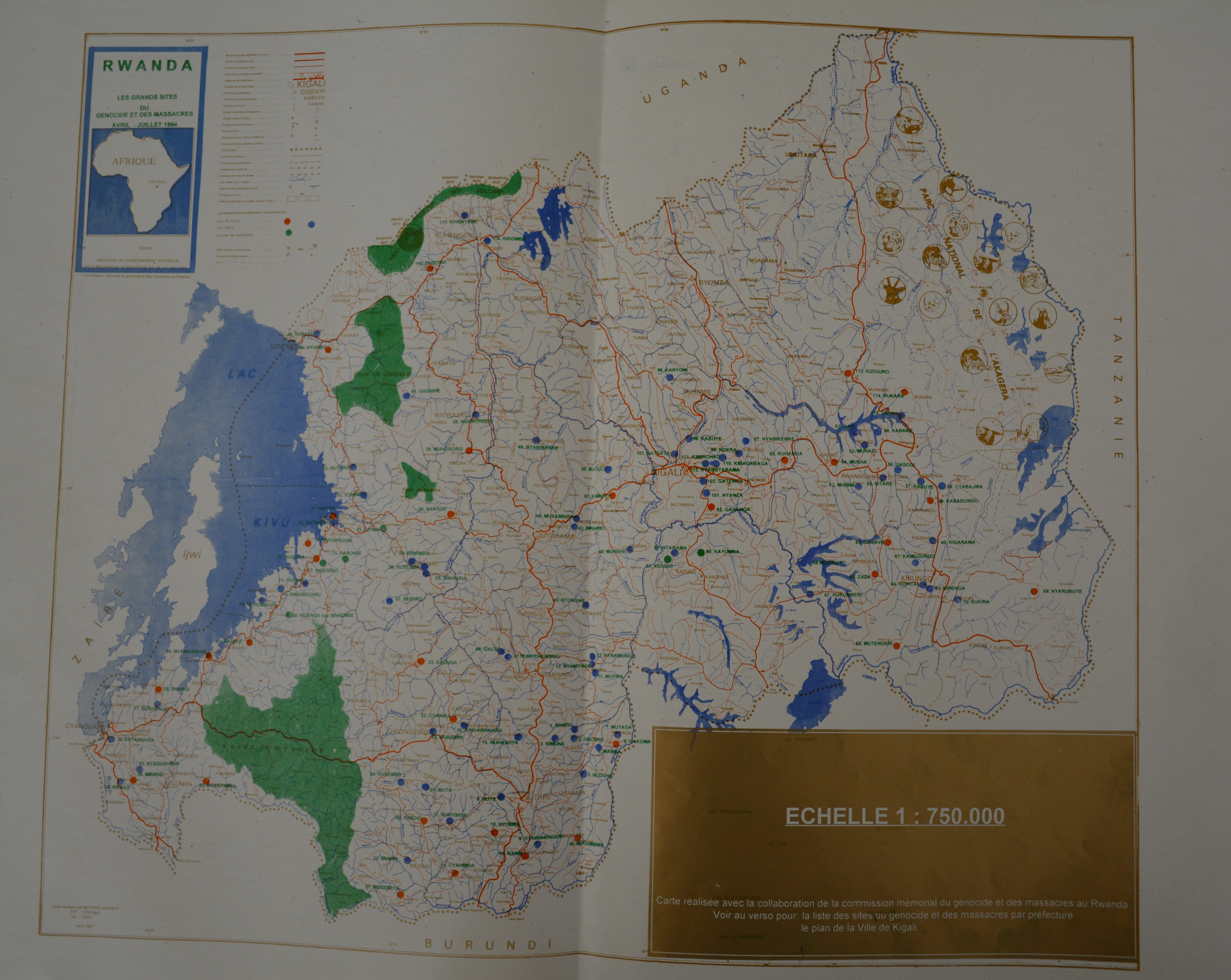
went to my old primary school in Kirambo. There was a Presbyterian church
and a hospital, and I remember that about 10,000 people took shelter there.
But we were attacked by a group of soldiers, gendarmes, prison guards and
people from the local authorities. ‘They came in official cars to take us to
the stadium in Kibuye, where they planned to kill us. But along with my
father and some other men, I didn’t follow their orders. Instead we escaped
to the mountains of Bisesero and Kirongi where we could fight back,
Resistance
Bisesero and Kirongi are two high mountains facing each other. There are
some forests but they are not dense, so we could see any attack coming and
either defend ourselves or escape, depending on the number of attackers.
From the mountains, we watched the killing of the people taken to the
stadium. That night some people managed to escape and join us in the
mountains. My mother was taken to the stadium, but later escaped to Bisesero
with a few other survivors. I had six sisters and three of them were killed in
the stadium,
In Bisesero we managed to defend ourselves day after day and we were
starting to hope to make it through another week. But that’s not how it
happened — power lay in the hands of soldiers planning the extermination
of the Tutsis. We resisted against the militia, the police and prison guards,
and so in the end they sent a force of presidential guards from Kigali who
eventually defeated us. We had been in Bisesero for a week when they
came, a week when we hadn't rested at all; we were constantly fighting. It
didn’t stop us fighting back because we had no other choice. We continued
fighting day after day. The fierce attacks began around 17 April and included
presidential guards, gendarmes, and commandos from the Mukamira and
Bigogwe camps, and others from Cyangugu. We had only one choice ~ to
fight with will and commitment with our limited strength, to die fighting
or give up. We chose to fight back.
Life in Bisesero was hard; they were overwhelmingly bad times and it’s
hard to explain. From the first day I arrived, I saw people dying bad deaths
for no reason. It's made a mark on my life. Even though I was lucky to
survive, it still a problem because I cannot forget it. Those scenes frequently
replay in my head like a film, even though it was reality. Its all kept
somewhere in my head. It was hard, but we were really motivated to resist,
hoping that some of us might survive. We continued fighting. They no
longer used ordinary guns, but heavy ammunition, grenade launchers,
rockets, anti-tanks, and so on. We had no other solution — we used stones
and arrows for the elders and those who could shoot them, I was too
young to have used such traditional weapons, so it was stones, beating with
sticks, making noise as a group to help push them back maybe a metre.
That killing continued day after day for almost the entire month of April.
I can't forget the terrible day when they killed my older brother.
On 14 April they killed lots of men, including my father and others of
his age group. These strong men had given us guidance, they had urged us
to make a stand and fight back. We obeyed them day after day. But the
goal of the Interahamwe (Hutu militia] and presidential guards was to
eliminate all these strong men. My older brother was killed in their first
attack and that’s how I also lost my father and my uncle.
We were fighting against a recognised military force, and one of our
strategies for defence was to move in a big group — separating would have
made it easy for them to kill us. Their plan was to force us out of the
mountains so they could kill us easily. Our goal was to stay there so we
could defend ourselves and survive the longest possible time. So we stayed
in a group and moved as a mass. Even though I was young, I'd go with the
other men and fight. We used to run among the attackers so they couldn’t
shoot. We'd mix with them, hit them with rocks and tackle them with their
guns. Then they would be ordered to move back to re-organise. They
would sometimes bring their speakerphones and tell us that we should go
to the stadium, that they wouldn’t kill us. But those were lies; there was no
way we would give up our positions, so at times we'd start the fight because
we didn’t want to move an inch backwards from where we were. We'd mix
with them and fight.
I spent almost two months in Bisesero. I got there on 8 April and left on
23 May. But by the end there were only a few of us and we had a shortage of
food and water. Fighting hungry against armed men is a problem. We were
weak. Official figures say that 85,000 people were killed there, but I think
there were more. I think there were around 160,000 or 175,000. Very many
people were killed - in my family all my siblings, my father, uncles. I come
from a big family ~ 188 people descended from my grandfather — but by the
time the French arrived, they had all been killed except me and my uncle.
I was injured in the fighting - I was hacked on the head and also have
a shot wound. That happened in the last days when the French came to
create the Zone Turquoise. They came with their helicopters saying they
had come to save us, that it was over and no more people were going to be
killed. We could also see that the killings had ended. We came out of the
forests and bushes where we were hiding, out into the open towards them.
But they had trucks full of Interahamwe and they had made us believe they
were full of food and clothes. It wasn’t true.
When we came out of hiding, they immediately attacked us and that
was when my uncle got killed. That day, I managed to escape even though
I had been shot. We were surrounded by Interahamwe and they sent them
in to finish us off. They killed nearly everybody, but they didn't get me.
When I got shot, I was leading a group of about 300-500 kids aged
between 12 and 16 whose job was to alert people when there was an attack
coming. We'd go to the mountains near ETO [Ecole Technique Officielle]
Kibuye and scream, bang drums, jerry-cans and any other noisy object we
could find. That way we let the people in Kirongi know, and those in Bisesero
would come and give them a hand. And when Bisesero was attacked, we'd
go and give them reinforcements.
On 19 April, when I got shot, my brother was also killed at the same
time. There was an attack of presidential guards with their fast jeeps and
they shot me as I was running to our positions. The people I was with rescued
me by dragging me into our positions. They shot me in the leg near my foot,
but I managed to escape. I ran with my uncle, but they shot him and when
I stayed with him, he ordered me to run on. He told me that his time had
come and I had a better chance of surviving to the next day and maybe the
day after. I obeyed him and left, even though I didn't want to leave him to
die alone. But he made me leave.
I escaped and returned to my neighbourhood in the valley of the
Kirongi mountain. I managed to spend a week there, hiding from 23-28
April in a cave without food or water. I was desperately thirsty. I could no
longer even speak or swallow saliva - I didn’t have any. It felt as if my
throat was about to close. Although I was in a place controlled by the
French, militias and presidential guards, I thought I might as well take the
risk of going to drink water because otherwise I would die of thirst. But I
had no way of moving safely and when I went to a waterhole where cows
drank, an attack group found me. I wasn’t scared because it was my second
month of witnessing killings. I asked them to let me finish drinking water
first, and they did. Then they walked me with my bullet wound to the hole
where they threw people after they had killed them.
I asked them why they were doing this. I knew already but just wanted
to hear them say it. In my area, they had a registration book which was
used to record all those killed. My family made up most of the population
of the area and I was the only one missing in their book. They showed me
the book and said they had been looking for me; now they had found me,
they wanted to kill me. I asked if they would answer one question. They agreed,
and I asked them why they wanted to kill me. They told me it was because
I was a Tutsi, a ‘cockroach' that Rwanda was not our country and so we
must be exterminated. By killing me, they added, they were doing me a
favour because my entire family and all the Tutsis had been killed, so living
for me would be useless. I asked them why they were going to kill me when
I had never wronged them, when in fact I had lived in harmony with them
and their children. They told me to ask God because He was the one who
created Tutsis and had abandoned them. I heard that and figured I couldn't
add anything.
Even though they were angry, I asked them for one more thing. I didn’t
care because I knew they were going to kill me anyway. I had seen death
and was no longer scared. Tasked them to let me pray and they agreed. While
I was praying, they started complaining that my prayer was too long. I begged
them to let me finish and they did. I continued. They started complaining
again, saying that my prayer was taking too long and they needed to go
somewhere else to find people to kill. They let me pray for the third time,
but this time they didn’t let me finish. They hit me on the head with a
club, I fell down unconscious and don’t know when they hacked me. But
I have four machete scars on my head, as well as the bullet wound in my
leg.
From 28 April-2 May I lay there unconscious. I woke up after a dream
about being killed and found myself in a hole. I crawled out with some
difficulty. I thought about what to do next and decided to go to Kibuye
town. I would go to the hospital and they would either kill me or treat me.
That's what I did. I was really looking for a place for a nicer death. From
where I was to Kibuye, it took me two days, walking and hiding. I got there
on 4 May. One thing I remember is that I heard on the Interahamwe’s radio
that the RPF [Rwandan Patriotic Front] had captured Kabgayi and managed
to rescue people who had fled there.
I reached the roadblock at the roundabout in Kibuye and people came
to look. There were soldiers and one wanted to shoot me, saying that I was
a ‘cockroach'. I told him that I came from Bisesero and was not a cockroach.
He replied by asking what the difference was between the RPF ‘cockroach’
and the Bisesero inyenzi. I kept quiet. When he was going to shoot me,
his partner told him to leave me alone because I was dying anyway from my
wounds. He said that killing me would bring him bad luck.
By then I didn’t care. I just had one goal - to get to the hospital where
I'd be healed or killed. When I got there, a crowd came to watch me and
they started to beat me. They asked me why I had come there and I said,
“To be healed or killed, one of the two”. One woman stood out and shielded
me. She told them they had killed enough people and if anyone killed me,
they would be looking for trouble from her. She took me inside the hospital
and treated me. But people aren't all the same. When this nurse had stitched
me up, her colleague came and undid the stitches. It happened again and
again, and eventually she asked her what she was doing. Her colleague
eventually agreed she could treat me as long as she didn’t use stitches; she
could give me tablets and everything else, but not stitches. Perhaps the
colleague thought that would impede my recovery.
The nurse obeyed and told me that she would do her best without
stitches. She gave me antibiotics, washed me, fed me and even gave me clothes
because what I was wearing was very dirty. I'd been wearing those clothes
since 8 April when we ran away. She also hired Interahamwe to protect me.
She paid them not to kill me. She assured me that she was going to do her
best and if I died, it would be because she couldn't do any more.
I spent the entire month of June in the hospital. I left on 2 July and
went to the Zone Turquoise, to the French military camp situated in the
girls’ high school. Even then, I couldn't go there by myself; I would have
been killed on the way, so the nurse gave me those Interahamwe to protect
me. They walked me up to the gate of the French military base and then
left. I only managed to spend that month in hospital because of the nurse
who treated me, fed me, clothed me and even paid for my protection.
When the Interahamwe went out to kill elsewhere, they used to leave a
notice saying that if they found me dead when they came back, it would be
best if my killer was dead as well before they got there. Those were the
terms on which I survived, while other people at the hospital were being
killed on a daily basis, especially the many girls who had survived at the
stadium and were kept to be raped. The militias would kill whichever of
the girls they got tired of raping. When I got to the hospital, there were a
few left but they were also gradually killed.
The nurse who saved me is still alive today. Her name is Gitabita
Nyirantaba; she’s between 45-50 years old and has a husband and four
kids. She lives in Kibuye and still works at the hospital. Whenever I go to
Kibuye for holidays, I stay at her place. Sometimes I just go and visit her.
I feel overwhelmed by all she did for me. I have nothing to give her in
return. She didn’t even know me when she saved me. She just saw people
gathering around me and torturing me and made a decision on her own to
rescue me. I think that was God's will. So I put that lady in a category of
humane people with a true human heart.
1 got to the French zone and they received me. I remember the first
thing they asked was whether I was Hutu or Tutsi. They asked me in French
and I responded even though my French was not that good. I answered
their question but they could already see I was a Tutsi because of the wounds,
They let me in and I lived there with many other people.
After the genocide
On 17 July, the French took 50 of us to Congo [DRC]. We were separated
into two groups, one that went to Nyarushishi, Cyangugu and the other to
Goma. The group to Goma consisted mostly of injured or ill people whose
recovery needed to be followed up. I don’t know exactly why they moved
us, but I think it was because the French zone shared borders with RPF
territory and they might have been scared that the RPF would attack us
and free us.
While I was with the French, I found out that one of my sisters was
alive and was being kept as a wife by an Interahamwe. The French were
going around retrieving people, so I told them about her and they went to
find her. They spoke to the Interahamwe and they came back and told me
that she was his wife and didn’t need to be rescued. They refused to bring
her to live with us and that’s how she was killed in October 1994. When
the French left Kibuye, the Interahamwe fled as the RPF was taking over.
The Interahamwe killed whoever was left, including my sister.
I was about two months in DRC, then we came home to Rwanda. We
didn’t know that all the Interahamwe from Kigali and all over the country
would come and live in the camp where the French took us, near Mugunga.
They tried to kill us. The Red Cross and some other human rights
organisations worked together and brought us home, all 50 of us. They
took us to Goma; we crossed the border and eventually came to Ruhengeri
where the Red Cross had a station. That was our destination because they
had arranged a place for us in a home for genocide orphans. We lived there
from January 1995. Ie was hard to get back home and I don’t know how
the Red Cross managed it.
In Ruhengeri, I lived in the orphanage and studied. I felt obliged to
start a new life because orphanage life didn’t offer me much future. By
luck, some distant relatives in Gisenyi found me and took me in to live
with them. I started a family life and I was like their adopted child.
I returned to Kibuye for the first time in May 1995. I go as a visitor
now but don't live there. First of all, there's no place for me to live. There's
no house ~ all our houses were destroyed. During the holidays, I go either
to Gisenyi or to Kibuye and visit the remains of my home. I also visit the
nurse who saved me and I go to see the mountains. When the holiday is
over, I come back either to Gisenyi or to Kigali where I am boarding and
studying at the Kigali Institute of Science, Technology and Management.
When I'm in Kibuye, I feel very sad; it’s immeasurable, I cannot forget
about Kibuye just because I had bad times there. It is my home. Wherever
I go in this world, I will not forget that I was born in Kibuye. Most
importantly, I cannot forget that I had a good life there in a tranquil family,
being raised by my parents, living with my siblings, with all I needed - the
affection of my parents, my siblings, my entire family... even of all Tutsis.
We lived well and I can’t forget Kibuye. I had a good life and a bad life
there; I lost all those people, but it still remains my home. I can spend half
an hour at the roundabout remembering when they wanted to shoot me. I
can’t forget the hospital where I lived for a month without any right to be
there. Kibuye is a marked place inside of me. I have to visit it and if possible
walk all the paths we walked during the genocide as we tried to save our
own lives.